

13 EMF Protection Products: What to Check Before Buying
*The information on EMF Academy is for educational purposes only and is not a substitute for professional medical advice. Please review our full Medical Disclaimer for more details. This post may contain affiliate links. Please see my disclosure to learn more.
An EMF meter measures fields. A shielding material can reduce a signal under particular conditions. A headset can let you hold your phone away from your head. Those are different jobs, and none of them automatically proves that a product prevents illness.
This guide compares 13 kinds of products sold for EMF protection. It explains what to check before buying, where the limitations matter and when a simpler option may be enough. The product details come from manufacturer specifications and current listings, with photographs from earlier EMF Academy articles. I have not carried out a new hands-on test for this update.
As an Amazon Associate I earn from qualifying purchases.
Compare 13 types of EMF protection products
| Product type | What it is for | What to check |
|---|---|---|
| EMF meter | Measure fields within its stated range | Frequency coverage, units and instrument limitations |
| Phone case | Physical protection; some include a shielding flap | A material result does not establish whole-phone exposure reduction |
| Airtube headset | Wired audio with sound delivered through tubes | Connector compatibility, comfort and where the phone stays |
| Smart meter cover | A proposed RF barrier around utility equipment | Utility permission, exact installation and communication requirements |
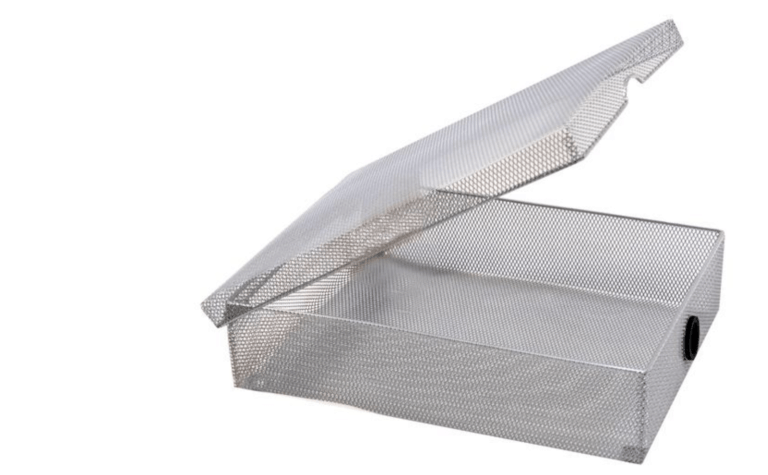
| Router guard | A proposed RF barrier around a router | Coverage, ventilation and actual measurements |
| Shielding blanket | A fabric barrier over a limited area | Frequency-specific material tests; no pregnancy protection promise |
| Aires device | Marketed with claims about biological responses | Clinical evidence for the advertised benefit |
| Laptop shield | A barrier between the computer and a surface | Model-specific coverage, heat management and device fit |
| Shielding clothing | Conductive fabric over part of the body | Coverage, seams, washing and no fertility guarantee |
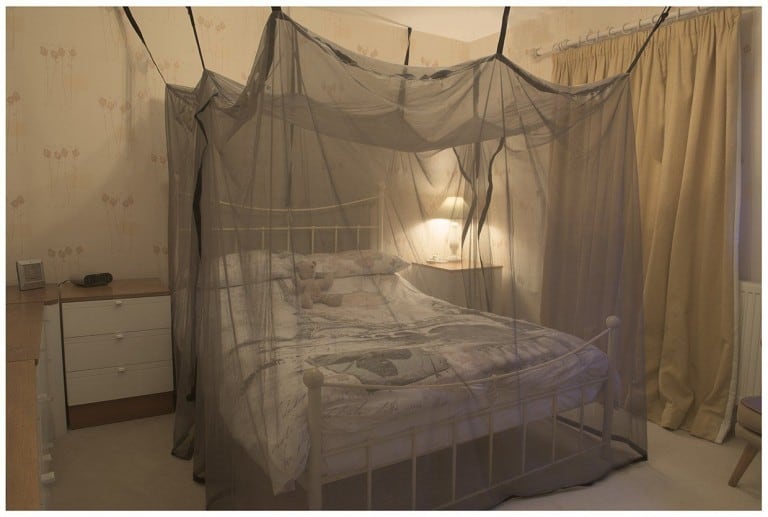
| Bed canopy | A fabric enclosure around a sleeping area | Complete installation and relevant RF tests; no sleep guarantee |
| Shielding paint | A conductive wall coating | Coverage, installation, bonding and frequency-specific data |
| Line-noise filter | Filter selected interference on electrical wiring | Electrical compatibility and the correct measurement method |
| Faraday bag | Isolate an enclosed device from radio signals | Fit, seal, condition and the connections you need |
What should “works” mean?
Ask the seller to name the result: a change in a field reading, shielding measured at a particular frequency, loss of a wireless connection, or a health outcome. Evidence for one does not establish the others. The World Health Organization’s explanatory Q&A distinguishes a measurable biological response from a harmful health effect. That page is dated 2016; it is background information, not a new clinical review of these products.
For Wi-Fi specifically, the UK Health Security Agency reports no consistent evidence of adverse effects on the health of the general population and does not recommend extra exposure-reduction measures for ordinary use. You do not need to buy a protection product merely because your home has Wi-Fi.
For a shielding claim, request the test report for the exact material or product: frequency range, method, instrument, geometry and result. A percentage without those details is not enough to predict what will happen in your home. Check whether the test concerns a flat material sample or the finished product with its seams, openings and closure.
A consumer meter comparison also needs care. Record the same position, orientation, mode, units and device activity before and after a change. A single low reading cannot establish a health benefit, and a meter cannot rule out signals outside its detection range.
Product uses and limitations
1. EMF meters: choose the range for the job

A meter can help you compare measurements within its specifications. It does not shield you, diagnose symptoms or tell you that a room is medically safe. Decide whether you want to measure low-frequency electric fields, magnetic fields or RF signals, then check the model’s coverage.
The GQ EMF-390 manual specifies broad RF detection from 10 MHz to 10 GHz, with spectrum analysis in selected bands. That is not continuous spectrum analysis over the full detection range. The ERICKHILL RT-100S specification lists 50 MHz to 3.5 GHz RF coverage, which does not include 5 or 6 GHz Wi-Fi.
Start with our meter comparison. If the GQ’s range suits your purpose, check the GQ EMF-390 listing on Amazon and the exact version supplied. These are published specifications, not a new accuracy test.
2. Phone cases: a flap is not whole-phone proof
Some wallet-style cases put a shielding layer in the front flap. Any material result applies to the test setup; it does not by itself tell you your total exposure during a call with a connected phone. Ask for finished-case testing and the usage conditions, including the flap position and network connection.
If your goal is to keep the phone farther from your head, speakerphone or a suitable headset is a simpler place to start. The National Cancer Institute describes hands-free use as an exposure-reduction option. A case is still useful for ordinary fit, grip and drop protection, without a claim that it prevents disease.
3. Airtube headsets: check audio and connector compatibility

An airtube design carries sound from a speaker through a hollow tube to the earpiece. If you prefer a wired headset, compare comfort, microphone quality, tube durability and whether the connector or adapter works with your phone. USB-C appearance alone is not enough to establish compatibility.
Keeping the phone away from your head is the practical use to evaluate. An ordinary headset can also allow that, as the NCI explains. The airtube design alone does not establish that a headset prevents illness. Keep listening volume reasonable whichever design you choose.
4. Smart meter covers: speak with the utility first
The EPA’s radiation questions page explains that smart meters use RF signals to communicate usage information. A cover’s advertised attenuation does not establish the exposure in every room or guarantee that the utility’s communications remain unaffected.
Do not remove a meter, break a seal or modify utility equipment yourself. Ask the utility about its rules and any opt-out arrangement before considering a cover. For a measurement question, identify the meter’s actual transmission band and seek an assessment appropriate to that equipment.
5. Router guards: compare the trade-offs with your goal
A metal enclosure is intended to attenuate RF signals. It is not enough to watch a meter reading fall at one position and assume the same reduction throughout a home. Check the exact frequencies, setup and network performance, as well as the equipment’s ventilation instructions.
First decide what you want to change. Moving a bedside router to an open, ventilated location may solve a placement problem. Ethernet may suit a desk connection. Turning off a supported wireless radio is different from merely pausing Internet access. Review your model’s manual and household dependencies before changing settings or buying an enclosure.
6. Shielding blankets: fabric data does not prove a health benefit
Some blankets contain conductive fabric. A material test should identify which frequencies were measured, how the sample was arranged and whether the result applies after use and washing. A blanket over part of the body is not the same as a sealed enclosure.
The evidence reviewed for this guide does not justify promising protection during pregnancy or for a baby. I would not choose one to treat symptoms or to make a device medically safe. If you want a blanket for warmth or comfort, compare those ordinary qualities without paying for an unproven health outcome.
7. Aires devices: read the evidence before the pitch
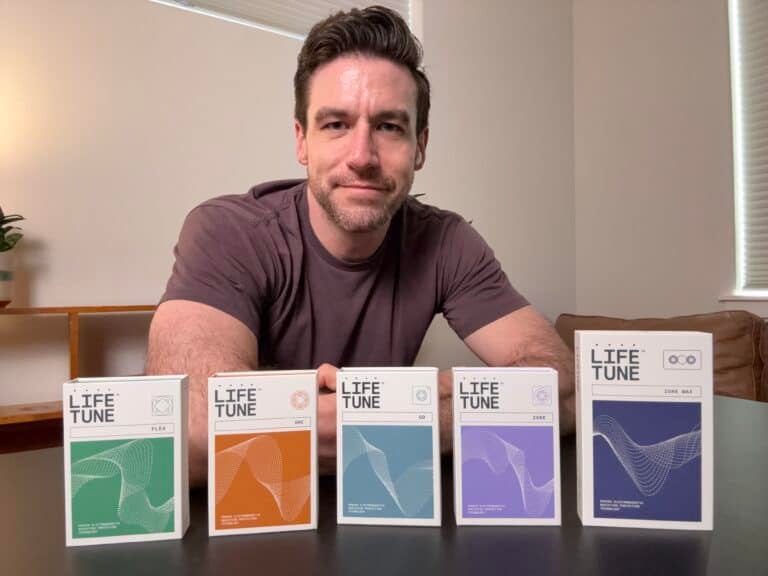
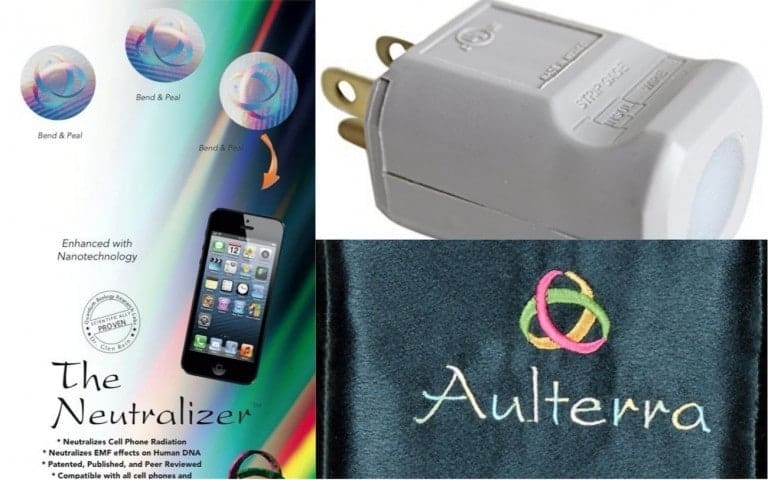
Earlier versions of this article endorsed Aires Lifetune products. Our updated Aires review separates the company’s claims from what the research and historical observations can establish.
A patent, product demonstration or change in a physiological measurement does not establish prevention of illness. If a product is sold on a biological benefit, the relevant question is whether credible clinical evidence supports that exact benefit in the intended users. A demonstration of a biological response is not enough to recommend a device as health protection.
8. Laptop shields and sleeves: check the exact specification
A sleeve may provide carrying protection, and a lap desk or stand can keep a laptop off your body. For a shielding layer, ask which side contains it and request the report for the exact version. Follow the laptop maker’s ventilation instructions; do not operate a computer inside a carrying sleeve.
During this review, the DefenderShield laptop-sleeve page used both GHz and THz in descriptions of its frequency range. Those units are not interchangeable. I would get a clear, model-specific report before relying on its broad frequency claim. Shielding data alone does not establish a benefit for fertility or reproductive health.
9. Shielding clothing: assess fit, coverage and care
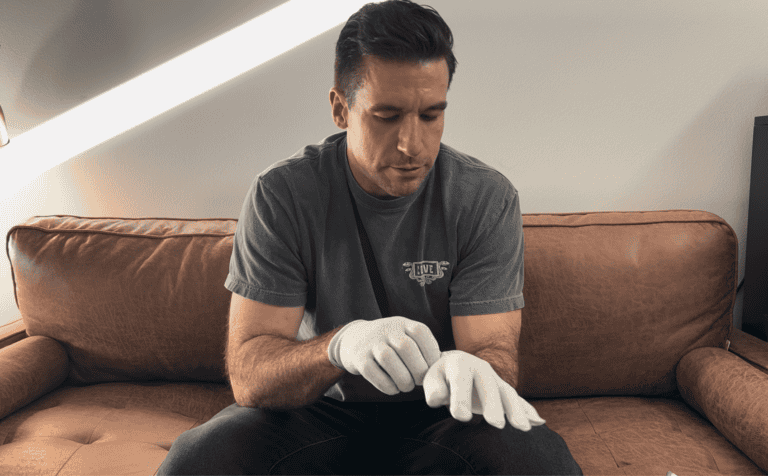
Conductive textiles appear in hats, underwear and other clothing. A fabric sample may attenuate RF in a laboratory while a garment has openings, seams and uncovered areas. Check the report for the relevant frequency and read the care instructions before assuming the result survives ordinary washing and wear.
A material result does not establish protection of a baby’s brain or preservation of fertility. Choose clothing for a clearly defined use and suitable fit; do not treat a garment as a medical intervention.
10. Bed canopies: evaluate the complete installation
A canopy is a shielding installation rather than a simple fabric specification. Its openings, floor arrangement and nearby equipment matter to the result. Ask the supplier how performance was measured in the finished setup and what installation conditions are required.
This review does not establish that a canopy improves sleep, blocks every type of EMF or protects health. It should not replace an assessment of persistent sleep problems. Before buying a large enclosure, work out what you want to change and whether a simpler placement or bedtime routine would address that issue.
11. Shielding paint: plan the installation before buying
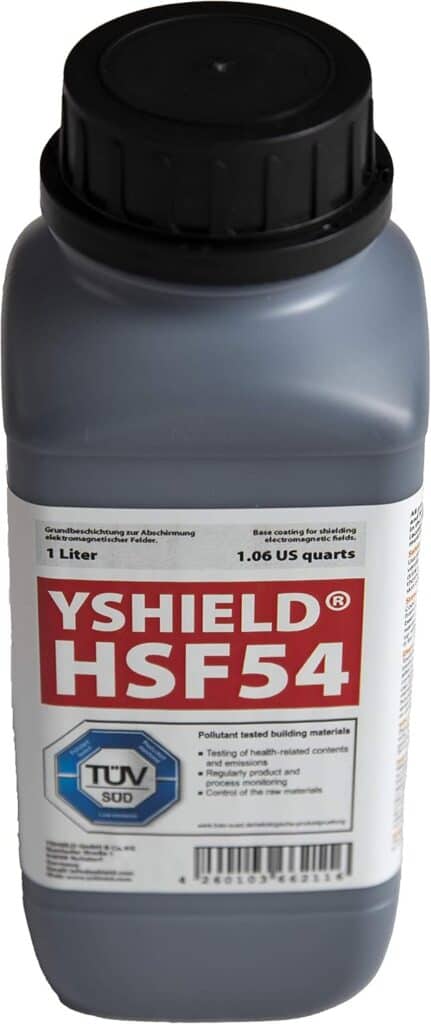
YSHIELD’s HSF54 information describes RF shielding and low-frequency electric-field shielding from a conductive coating. Its specified attenuation depends on frequency, coating thickness and number of coats. That is not a universal percentage for all fields in a painted room, nor a health guarantee.
For large shielded surfaces, the maker requires a connection to the equipotential bonding system. Have a qualified professional assess the installation and relevant electrical requirements. Do not improvise a connection to an outlet, pipe or radiator. Doors, windows and uncoated areas also need consideration when evaluating a room.
If you have a defined project and a suitable installation plan, the one-liter HSF54 Amazon listing is a product option to inspect. Check the current data sheet for the supplied product, coverage and required accessories before calculating the total cost.
12. Line-noise filters: verify the product and electrical system
Products sold as “dirty electricity” filters target selected interference on wiring. That is different from blocking a Wi-Fi signal. Measuring a change with a compatible line-noise instrument does not establish an improvement in sleep, symptoms or health.
The current Greenwave listing identifies a one-room starter kit with two filters; it is not a Stetzerizer. Check that the supplied kit and electrical specifications match your needs.
Read Greenwave’s compatibility instructions before considering its filters. The maker warns against using its capacitive filters on generator-supplied power. Check the exact voltage, plug type and supported equipment with the manufacturer; a lower meter display alone is not a reason to add filters throughout a home.
13. Faraday bags: a useful option for signal isolation
A properly designed and closed Faraday bag is intended to isolate an enclosed device from specified radio signals. That can suit a deliberate offline period or device transport. It also prevents the connections you may need; keep a phone available if you rely on receiving calls.
The Mission Darkness Dry Shield Faraday Tote 15L is a large tote rather than a small phone sleeve. The manufacturer’s instructions specify loading limits, a rolled closure and precautions against wet devices or punctures. The maker gives usable closed dimensions of 17 by 9 inches. Check those measurements, not just the volume label.
After closing a bag as instructed, checking whether your intended connections still work is a practical first check. A failed incoming call alone does not prove that every frequency is blocked, and the enclosure does not disable a device’s local microphone, camera or stored data. Do not treat broad “anti-hacking” marketing as complete device security or the bag as proven health protection.
Common questions
Do EMF protection products work?
Some products can measure fields or attenuate specified signals under particular conditions. That is different from proving prevention of illness. Check the exact product, frequency range, test method and intended use instead of relying on a general protection claim.
Does everyone with Wi-Fi need a protection product?
No. UKHSA reports no consistent evidence of adverse effects on the health of the general population from Wi-Fi and does not recommend extra exposure-reduction measures for ordinary use. A product purchase is not an automatic requirement.
Can a home EMF meter prove a product protects your health?
No. A consumer meter may show a change within its measurement range, but it cannot establish a clinical benefit or diagnose symptoms. Signals outside its detection range and differences in the measurement setup also matter.
What should I check before buying?
Start with a specific purpose, then check the exact model, compatibility and relevant test report. Distinguish a material sample from a finished product. Compare the total installation cost and return policy, and consider whether an existing setting or simpler tool would meet the same need.


All of your blogs have opened my eyes to the exposure new technology and old has on our health and with the things they don’t list on products or mention that should be. Every human being should know the risks and dangers these devices emit, and that they can have the choice to protect themselves and ones family. Thank you Christian for helping me protect my family. Great Work and Very inspirational.
This is great info and thank you for posting this! Any chance the chips that attach to the phone or phone case work to reduce the radiation?
Hello David! Thanks for the kind words. I do believe that some of the “chips” on the market do work to reduce cell-phone radiation, however be careful because I think there are many scam products on the market. The one company I trust most for this would be Aires Tech. If you want to read about these products more in-depth, I have a full article you can read.
Update, October 10, 2026: My earlier recommendation should not be taken as proof that a chip reduces exposure or protects health. I’ve removed the old sales link. The updated Aires review explains the company’s claims, the research I reviewed and its limits. Please read it before deciding whether to buy.