Electric Vehicle Charging EMF: Everything You Need to Know
*The information on EMF Academy is for educational purposes only and is not a substitute for professional medical advice. Please review our full Medical Disclaimer for more details. This post may contain affiliate links. Please see my disclosure to learn more.
I’ve been getting asked more and more often about EMF radiation from electric vehicle chargers, especially home charging setups.
It makes total sense to me. EVs (electric vehicles) are everywhere now, and millions of people are installing Level 2 chargers in their garages.
These chargers draw a lot of power (often 7-19 kW), they run for hours at a time, and in many cases, they’re mounted on walls that are shared with bedrooms, living rooms, or kids’ playrooms.
So naturally, people want to know: are these chargers exposing my family to high levels of EMF radiation?
The short answer is yes, EV chargers do emit electromagnetic fields, or EMF radiation.
But how much, and how concerned you may need to be, depends on a few things, including: the type of charger, distance from living spaces, how long you’re exposed, and more.
In this guide, I’m going to break down everything you need to know about EV charging EMF radiation, including actual measurements from peer-reviewed studies, what the research says about safety, and some simple steps you can take to reduce your exposure.
Whether you’re about to install a home charger or you’ve already been using one for a while, this guide will help you make better decisions for your family and for yourself.
Understanding EV Charger EMF Basics
Before we dive into the measurements and safety concerns, it helps to understand how EV chargers actually work and why they emit electromagnetic fields in the first place.
How EV Chargers Generate EMF
Essentially, any device that uses electricity is going to emit some level of EMF radiation. EV chargers are no exception.
When you plug your car in to charge, the charger is converting AC power from your home’s electrical grid into a form that your car’s battery can use.
All of this electrical activity creates electromagnetic fields, electric fields, and magnetic fields that radiate outward from the charger and the charging cable.
The amount of EMF depends on how much power is flowing through the system. The more kilowatts your charger is pushing, the stronger the electromagnetic fields tend to be.
The Three Levels of EV Charging
Not all EV chargers are created equal. There are three main types, and they each work a bit differerent:
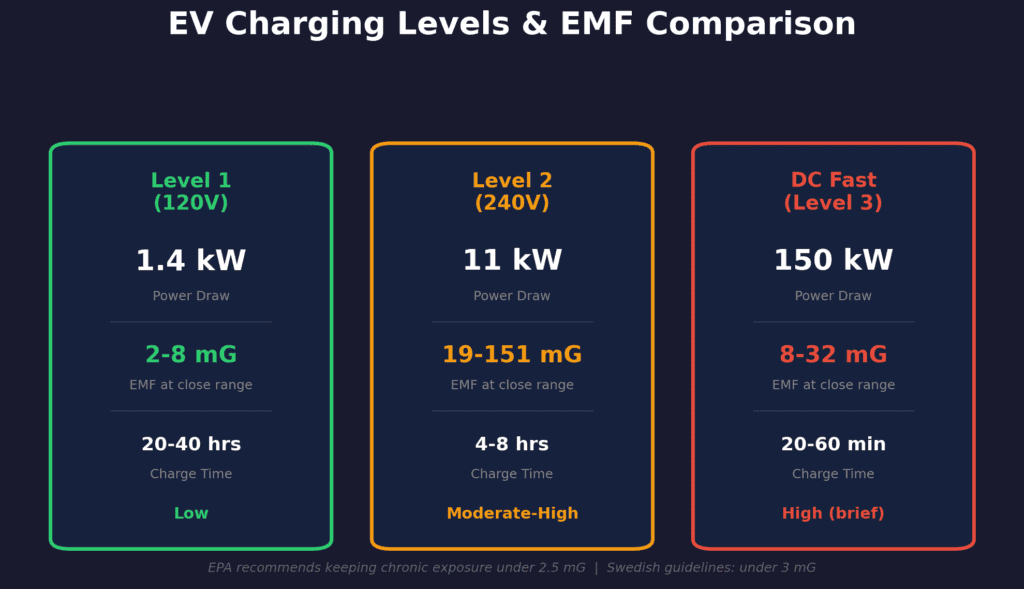
Level 1 Charging (120V) This is basically just plugging your car into a standard household outlet. It’s the slowest option, typically adding only 3-5 miles of range per hour. Because it draws relatively low power (around 1.4-1.9 kW), level 1 charging produces the lowest EMF levels.
Level 2 Charging (240V) This is what most people install at home. Level 2 chargers use a 240-volt circuit (like your dryer or oven) and can deliver anywhere from 3.3 kW to 19.2 kW of power. They’ll fully charge most EVs in 4-8 hours, which is why people often run them overnight.
Because of the higher power draw, Level 2 chargers emit significantly more EMF than Level 1, and since they’re usually mounted on garage walls, proximity to living spaces becomes a real consideration.
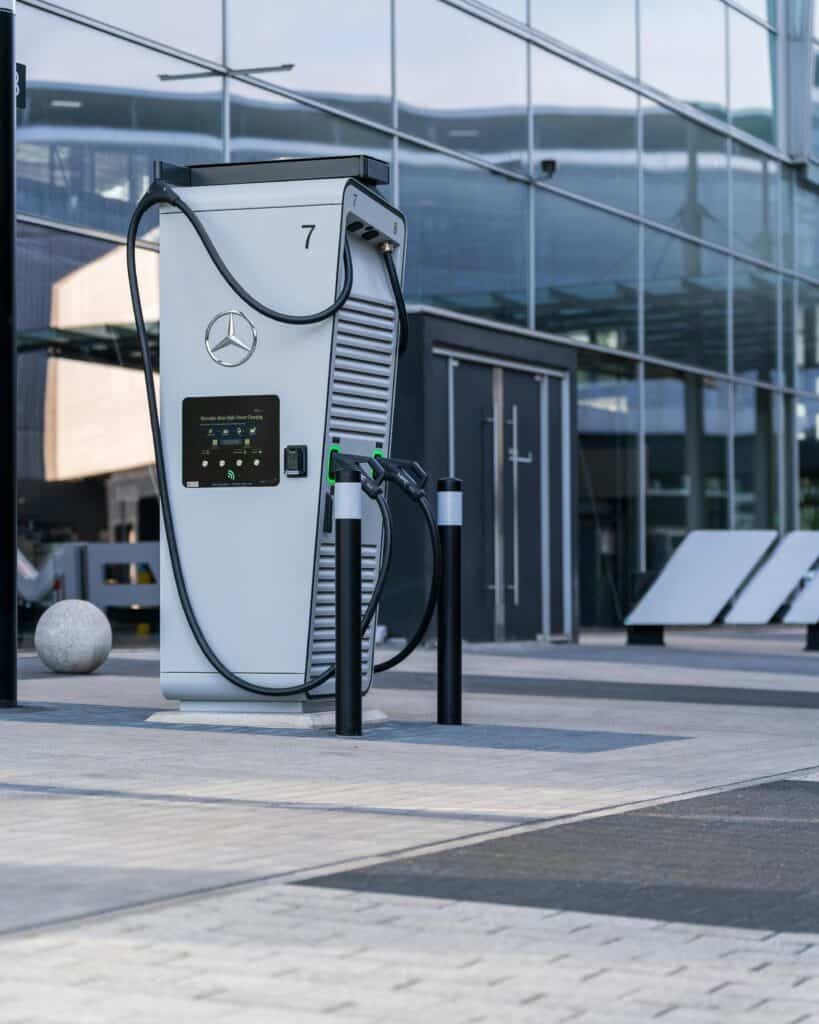
DC Fast Charging (Level 3) These are the high-powered public charging stations you see along highways. They can deliver 50 kW to 350 kW of power and charge a car in 20-60 minutes.
DC fast chargers produce the highest peak EMF levels, but since you’re only exposed for short periods (and you’re typically standing outside the car), the concern is much less than with home charging.
Why Frequency Matters
Most home EV chargers operate at standard power frequencies: 50 or 60 Hz, depending on where you live.
However, the power conversion process can also generate higher-frequency “harmonics”.
Research shows that both the 50/60 Hz frequency and these harmonic frequencies contribute to the total EMF exposure, which is why proper shielding and distance are so important.
The Numbers: Actual EMF Measurements
Alright, now let’s get into the actual data. How much EMF radiation do these chargers really emit?
I pulled measurements from several peer-reviewed studies so we can look at real numbers instead of just speculation.
Level 2 Home Chargers (The Most Common Setup)
A 2023 study published in a journal titled: Sensors measured EMF levels at six different EV charging facilities. For standard Level 2 chargers, they found:
- Electric field: 139 to 214 V/m (volts per meter) at peak
- Magnetic field: 1.54 to 12.06 A/m (amperes per meter) at peak
To put that in more familiar terms, the magnetic field levels translate to roughly 19 to 151 milligauss (mG) at very close range.
Now, for context, the EPA suggests keeping chronic exposure under 2.5 mG, and Swedish guidelines recommend staying below 3 mG in living spaces.
So if you’re standing right next to a Level 2 charger while it’s actively charging, you could be exposed to magnetic fields that are 5 to 50 times higher than what many experts consider safe for long-term exposure.
If you want to learn more about EMF exposure inside vehicles, I have a complete guide on car EMF radiation that covers this in detail.
The good news? These fields drop off quickly with distance. We’ll talk more about that in a minute.
DC Fast Charging Stations
Public fast chargers push a lot more power, so you’d think they’d emit way more EMF, right?
Interestingly, research on DC fast charging stations found that they actually showed lower magnetic field readings in some cases, maxing out around 0.062 to 2.58 A/m (roughly 8 to 32 mG).
Why the difference? Fast chargers use different power conversion technology, and they’re also usually outdoors with no nearby walls or metal structures to reflect the fields.
Plus, you’re only exposed for 20 to 40 minutes instead of 8 hours overnight, so the cumulative exposure is much less.
Inside the Vehicle During Charging
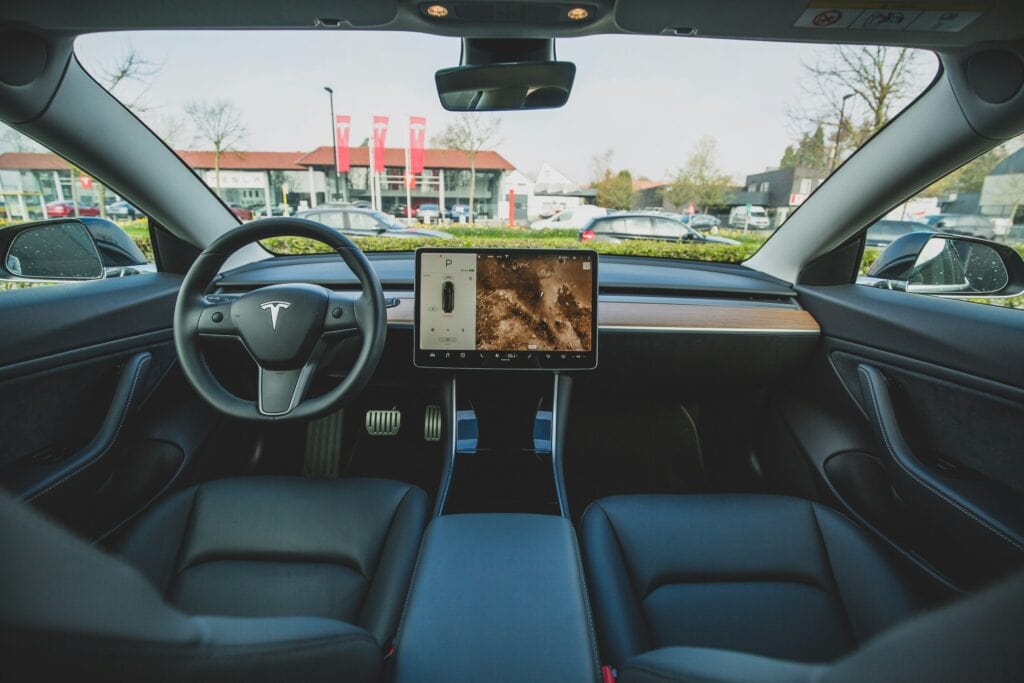
A 2025 study from the German Federal Office for Radiation Protection (BfS) looked at EMF levels inside 13 different electric vehicles while charging and driving.
They found that while charging at home:
- Magnetic fields inside the cabin ranged from 2 to 30 µT (20 to 300 mG) depending on the vehicle and where you measured.
- Some vehicles exceeded the older ICNIRP 1998 guidelines, though all stayed within the current 2010 limits.
So if you’re sitting in your EV while it charges in the garage (say, listening to music or waiting), you’re getting exposed to elevated EMF levels.
It’s not extreme, but it’s something to be aware of.
Distance Makes a Huge Difference
Here’s the key thing to understand: EMF strength drops dramatically as you move away from the source.
This follows something called the inverse square law. Basically, if you double your distance from an EMF source, your exposure drops to about one-quarter of what it was.
So if you’re getting 40 mG standing right next to your charger, moving just 3 feet away might drop that to 10 mG. At 6 feet, it could be under 3 mG.
Unfortunately, the studies I found didn’t give precise measurements at 1-foot, 3-foot, and 6-foot intervals.
But the principle holds: distance is your friend when it comes to EMF exposure.
What About Specific Charger Brands?
I really wish I could give you exact EMF readings for popular models like the Tesla Wall Connector, ChargePoint Home Flex, or JuiceBox.
But manufacturers don’t publish this data, and I couldn’t find any independent testing on specific models just yet.
If you want to know how your specific charger performs, the best option is to test it yourself with a quality EMF meter. I’ll show you how to do that later in this article.
Real-World Scenarios: Where EMF Exposure Actually Matters
Let me break down the situations where EV charger EMF becomes a real concern. Not theoretical stuff. Actual everyday scenarios that probably apply to you.
Overnight Charging in Attached Garages
This is probably the biggest issue.
You plug in your EV at night in the attached garage. The charger sits there pumping electricity for 6-8 hours. And that garage shares a wall with your house.
If your bedroom is above or next to the garage, you’re sleeping 10-15 feet from an Level 2 charger for hours.
Those measurements I mentioned earlier don’t just disappear through walls and floors. Drywall and wood framing don’t really work well at blocking EMF radiation.
That’s chronic exposure. Very different from standing near a charger for 20 minutes at a public station.
Bedrooms Adjacent to Garage Walls
This is really the same principle.
If your bed sits against the wall that connects to the garage, you might be even closer to the charger than the scenario above.
Most people don’t even think about it. They mount the charger wherever it’s convenient for the electrical panel. Not where it minimizes exposure to living spaces.
If you’re in this situation, I’d really encourage you to test the EMF levels on the bedroom side of that wall while the car is charging.
You might be surprised at what you find.
Public Charging Stations
Exposure here is high, but usually brief. DC fast chargers can put out significant EMF right at the charging port. But you’re only there 20-30 minutes.
The real concern at public stations is a little different though.
If you’ve got children in the car while you charge, or they get out and play near the vehicle, they could be getting more exposure than adults sitting inside the cabin.
Studies show EMF readings drop significantly inside the passenger area during charging, usually under 5 mG. But right outside the car, near the charging port? Much higher.
Children Playing Near Charging Vehicles
This one bugs me. Because it’s so common and nobody talks about it.
Your EV is charging in the driveway. Kids are playing basketball, riding bikes, playing with the dog. They’re running around near that charging vehicle for hours.
Children’s developing bodies are more susceptible to EMF exposure than adults. Their skulls are thinner, their cells are dividing faster, and they’re smaller, meaning they’re physically closer to peak EMF zones when they’re near the car.
I’m not saying panic and keep your kids locked inside. But awareness matters.
If you can charge overnight when the kids are in bed, that’s a smarter move than afternoon charging during playtime (assuming their bedroom isn’t located too close to the charger).
The Home Office Problem
One more scenario I think a lot of people overlook.
Home office in the garage, or in a bonus room right above it. You’re working at your desk for 8-10 hours. The EV charges below you or behind that wall.
That’s long-term, daily exposure.
If this is your setup, it’s worth grabbing an EMF meter and checking what you’re actually being exposed to at your desk while the car charges.
You might find that simply adjusting your charging schedule makes a big difference.
Practical Safety Guidelines
Alright, so what can you actually do about all this?
Fortunately, reducing your EV charger EMF exposure doesn’t require anything crazy. Most of it comes down to smart placement and timing.
1. Mount Your Charger on the Right Wall
This is the single biggest thing you can do.
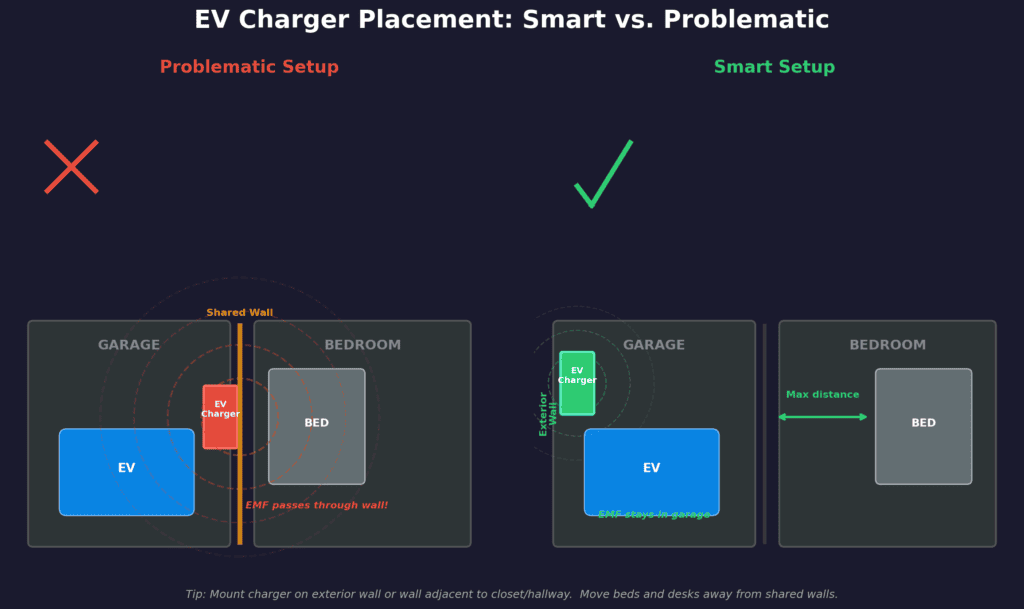
If possible, install your charger on a wall that doesn’t share space with a bedroom, nursery, or home office. An exterior garage wall or a wall adjacent to a hallway or closet is ideal.
If you’ve already installed your charger on a shared wall, it may be worth the cost of having an electrician move it. The difference in EMF exposure on the other side could be significant.
2. Use Distance to Your Advantage
We talked about the inverse square law earlier. Even a few extra feet between the charger and your living space makes a real difference.
If moving the charger isn’t an option, try rearranging the room on the other side. Push the bed or desk away from the shared wall. Simple, free, and surprisingly effective.
3. Set a Charging Schedule
Most Level 2 chargers and EVs let you schedule when charging starts and stops. Use this.
If you get home at 6 PM and the kids are playing in the garage or the room next to it, don’t start charging right away.
Set it to begin at midnight when everyone’s asleep and farther from the charger.
Better yet, set it to finish before you wake up so it’s not running while you’re getting ready in the morning.
4. Don’t Sit in the Car While It Charges
I know some people hang out in their EV while it charges, especially at public stations. Based on what that German BfS study found about EMF levels during charging, I’d avoid it when you can.
Step out of the car. Walk around, grab a coffee, whatever. Just don’t sit in the vehicle for the full charging session if you don’t have to.
5. Test Your Specific Setup
Every home is different. Wall materials, charger model, circuit layout, and distance to living spaces all affects your actual exposure.
The best way to know what your personal exposure situation looks like is to measure it yourself. A meter like the TriField TF2 will tell you exactly what’s happening on both sides of that wall.
Take readings while the car is actively charging at multiple spots: the wall behind the charger, bedrooms, office, and kids rooms. This will give you real data to work with.
Special Considerations
These are some of the groups that I think should be especially careful when it comes to EMF radiation exposure.
Pregnancy and EV Charging
If you’re pregnant, or your partner is, this is important. f
Multiple studies have linked chronic EMF exposure to potential risks during pregnancy, including effects on fetal development.
We’re not talking about standing near a charger once. We’re talking about sleeping near one every night over a long period of time.
The research isn’t absolutely conclusive, but pregnancy is one of those times when the precautionary principle really makes sense. If you can charge on a wall away from the bedroom, or switch to Level 1 charging for a few months, why not?
Children
I touched on this already, but I think it’s worth repeating.
Kids absorb more EMF radiation thanadults. This is mostly because children’s bodies are still developing, their skulls are thinner, and they tend to spend more time on the floor or ground level, where EMF readings can actually be higher.
If your child’s bedroom shares a wall with the garage where the charger is located, or their playroom is directly above it, test those areas while your vehicle is charging. If you find the readings are really high, consider either moving the charger or rearranging rooms.
People With Electro-Hypersensitivity (EHS)
Some people are significantly more sensitive to EMF than others. If you experience symptoms like headaches, fatigue, or sleep disruption and you recently installed a home EV charger, there could be a connection.
EHS isn’t really widely recognized by mainstream medicine yet, but the symptoms are real for the people experiencing them. If this sounds like you, testing your environment and reducing exposure where you can is definitely worthwhile.
How to Test Your EV Charger Setup at Home
You don’t need to hire anyone for this. Testing EV charger EMF at home is pretty straightforward if you have the right meter.
What You Need

A quality EMF meter that measures magnetic fields is the most important thing here. That’s where the bulk of EV charger EMF comes from.
I recommend the GQ EMF-390 for most people. It’s accurate, easy to use, and reasonably priced. If you want something with more data logging capability, the GQ EMF-390 is also solid.
Or read my full article on the best EMF meters.
How to Do It
Start charging your vehicle like you normally would. Then, wait about 10 minutes so your car will be charging the full amount of power from the charger.
Next, grab your emf meter, and take readings at these spots:
- Close to the charger itself (this will be your baseline reading)
- On the other side of the wall where the charger is mounted
- In any bedroom that shares a wall or floor with the garage
- At bed height and floor level in those rooms
- At your desk if you work near the garage
Write down the numbers. You’re looking for magnetic field readings under 3 mG in living spaces.
If you consistently find readings above that, especially in bedrooms, you’ll want to look at the steps I covered above to bring it down.
Test at Various Times
Your charger pulls different amounts of power throughout a session. Test early in the charge and again near the end. Some chargers reduce usage as the battery fills up, which means lower EMF toward the end of the cycle.
Final Thoughts
EV chargers emit EMF radiation. That’s just a fact. But whether it’s a problem for you and your family depends on your specific setup.
The good news is that most of the fixes are simple:
- Mount the charger on the right wall.
- Schedule charging for overnight.
- Keep some distance between the charger and the rooms where you spend the most time.
- Test your setup so you know what you’re actually dealing with.
You don’t need to give up your EV or stop charging at home. You just need to be smart about it.
If you have questions about anything I covered here, feel free to reach out or drop a comment below. I’m always happy to help.
If you’re looking for something else to read, here are 17 EMF Protection Products That Actually Work.
Your Friend in Health, Jaron