

Low-EMF Hair Dryers: 7 Models Compared
*The information on EMF Academy is for educational purposes only and is not a substitute for professional medical advice. Please review our full Medical Disclaimer for more details. This post may contain affiliate links. Please see my disclosure to learn more.
A low-EMF hair dryer claim is easier to judge when the maker explains what it measured: the type of field, distance, setting and comparison dryer. Without that information, a label or percentage can’t tell you which model produces the lowest reading.
Below are seven dryers, with the features and EMF claims to check before buying. The comparison uses current manufacturer descriptions and the exact linked models; we don’t have comparable hands-on emissions measurements for these seven dryers. Start with the table, then check your chosen version’s voltage and attachments.
Never run a hair dryer while sleeping or leave it unattended. Keep it away from water and bedding, keep its air openings clear, and unplug it after use. A low-EMF label doesn’t remove electrical, burn or fire hazards. Conair’s dryer instructions warn against use while sleeping, and the CPSC warns against blocked vents and operating a dryer on a bed or couch.
This article contains affiliate links. If you buy through them, I may earn a commission at no extra cost to you. As an Amazon Associate I earn from qualifying purchases.
Hair dryer comparison: claims and features
The order below isn’t a ranking of emissions. Manufacturer claims are identified separately from practical features. Prices, stock and included accessories can change, so check the linked listing for the version you’re ordering.
| Model | EMF claim | Features to compare | Before buying |
|---|---|---|---|
| TREZORO, black (paid link) | No comparable low-EMF result established in this review. | Current listing: 2000W, three heat settings, two speeds, two concentrators. | Check the selected variant; a diffuser version is a different listing. |
| Elchim 3900 Healthy Ionic | Maker advertises a low-EMF protection system. | US maker specification: 1875W, 110V, two concentrators and cold-air button. | Ask for measured fields and test conditions; diffuser sold separately by the maker. |
| CHI Ceramic 1875W | No comparable low-EMF result established for this exact model. | Jett Black ceramic dryer with concentrator. | This link is CHI Ceramic, not CHI Pro. |
| Shield Life EMF Freedom | Maker advertises 99% EMF shielding. | Maker lists 1500W, 120V/60Hz, three temperatures and three speeds. | Percentage needs a defined field, baseline, distance and method. |
| Solano Moda | No comparable low-EMF result established in this review. | Current listing identifies a 1750W Moda dryer. | Different model from Supersolano 3500 Lite; confirm controls with seller. |
| Karmin G3 Pro | Maker lists “Low EMF.” | Up to 2000W, three temperature settings, two speeds, concentrators and diffuser. | Choose the correct regional version and verify its voltage. |
| FHI Heat Platform 1900 Nano Lite Pro | No comparable low-EMF result established in this review. | Maker lists 1500W; nozzle, comb and diffuser. | “1900” is a model name; verify the supplied unit’s rating. |
TREZORO: check the selected version

The black TREZORO dryer (paid link) is currently described as 2000W, with three heat settings, two speeds, a cool-shot button and two concentrators. The diffuser package is a separate variant. Its ceramic and ionic features are styling features, not evidence that this model produces less magnetic field than the others here. Compare the attachments and controls you need, and ask for a test report if low EMF is your main buying criterion.
Elchim 3900 Healthy Ionic: a stated low-EMF claim

Elchim’s US product page identifies a 1875W, 110V version and advertises an electromagnetic-field protection system. It lists two quick-lock concentrators and a cold-air button; its Cocoon diffuser is sold separately. The low-EMF wording doesn’t provide a directly comparable result against every dryer on this page. Check the voltage and included accessories on the Elchim listing, and request the measurement conditions before treating the claim as a reason to pay more.
CHI Ceramic 1875W: different from CHI Pro
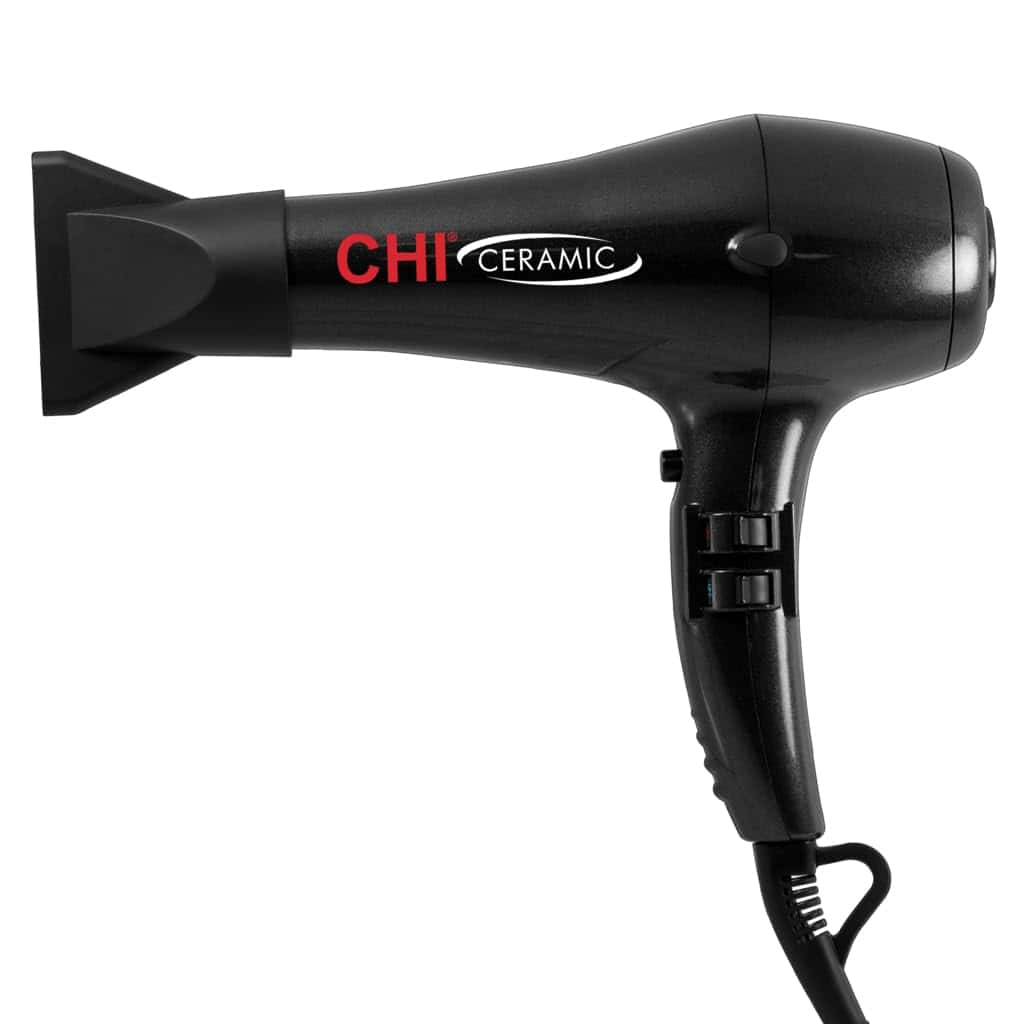
The CHI Ceramic 1875W dryer comes in Jett Black with a concentrator nozzle. Check the Ceramic model’s specifications; CHI Pro is a different dryer. Claims made for another CHI dryer don’t establish the emissions of this one. Choose it for verified styling features if they fit your needs; don’t assume that ceramic or ionic technology means a lower magnetic-field reading.
Shield Life EMF Freedom: what the percentage means
Shield Life’s product page advertises 99% EMF shielding and lists 1500W, 120V/60Hz, three speed settings and three temperature settings. The current Shield Life listing also advertises 99%. That percentage is a manufacturer claim. The maker page reviewed doesn’t show the complete method, readings and comparison conditions needed to independently rank it against these other dryers. It doesn’t establish that buying this dryer prevents illness or protects hair follicles from EMF damage.
Solano Moda: use specifications for Moda
The Solano link identifies a Moda dryer rated at 1750W. Moda and Supersolano 3500 Lite are different dryers. The listing gives conflicting speed counts, so confirm the controls with the seller. Ionic and far-infrared wording doesn’t provide a comparative low-frequency field measurement. Don’t transfer another Solano model’s specifications or EMF claims to Moda.
Karmin G3 Pro: verify the regional version

Karmin’s G3 Pro page lists a motor rated up to 2000W, three temperature settings, two speeds, a cool-shot function, concentrator attachments and a diffuser. It also lists low EMF, without a numerical comparison or full measurement method on the reviewed page. Regional plug options are offered, so confirm the voltage and model rating rather than assuming every version is identical. The maker currently lists a one-year manufacturer’s warranty; confirm coverage for your country and seller.
FHI Heat Platform 1900: the model name isn’t wattage
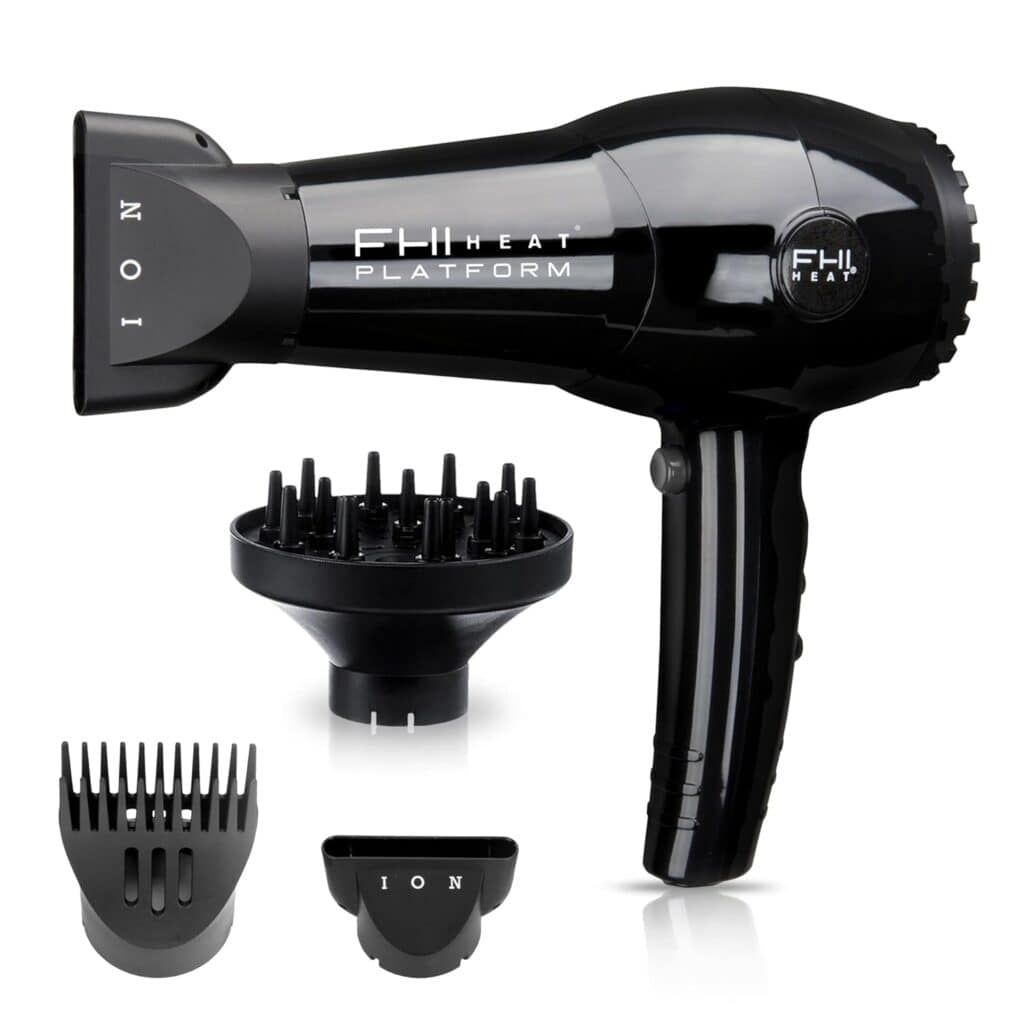
FHI Heat’s Platform 1900 Nano Lite Pro page, model PF7005, lists 1500W and includes a nozzle, straightening comb and diffuser. The linked retail model also identifies PF7005, but its wattage field conflicts with the maker page. Verify the rating on the unit and its documentation. Neither the model name nor its tourmaline, ceramic and ionic styling features establish lower EMF than the other dryers here.
What a hair dryer’s EMF reading tells you
Plug-in appliances produce low-frequency electric and magnetic fields. Electric-field readings use volts per meter; magnetic flux density can be shown in microtesla or gauss. These are different quantities. A single unspecified “EMF” number doesn’t make a useful comparison. ICNIRP explains these fields and exposure guidelines, including the distinction between basic restrictions and external reference levels.
The World Health Organization notes that magnetic-field levels vary substantially between appliance models and with distance. There isn’t one universal reading for every hair dryer, and a wattage rating doesn’t predict your model’s field. Don’t assume that a fixed distance formula, lower speed or cool-shot setting will produce a particular reading.
How to compare measurements
If you want to compare readings, use a meter designed for the field and frequency you’re measuring. Follow the meter manual and the dryer’s safety instructions. An informal home comparison isn’t a medical test or product safety certification.
- Record the exact dryer model, meter model, measurement mode and units.
- Measure the room background with the dryer off.
- Use the same distances from the same part of each dryer, and record its heat and speed settings.
- Keep the meter’s orientation consistent. Repeat readings and record any overload rather than treating it as zero.
- Keep the meter away from water, hot air and moving parts. Don’t obstruct the dryer’s intake or modify the appliance.
Our EMF meter comparison explains why the measurement mode matters. A meter that measures power-frequency electric and magnetic fields may not measure radiofrequency signals from Wi-Fi or Bluetooth.
Is a low-EMF dryer worth buying?
Choose a dryer for features you can verify: suitable heat controls, attachments, comfortable handling, the correct voltage and a workable return policy. If lower field readings are important to you, ask the maker for its measurements and method. This comparison doesn’t establish a lowest-emission winner or a health benefit from replacing your dryer.
If you experience symptoms, discuss them with a healthcare professional rather than assuming a dryer is the cause. WHO’s guidance on electromagnetic hypersensitivity recognizes that symptoms can be real and disabling while stating that a causal link to EMF exposure hasn’t been established.
Common questions
Does an ionic or ceramic hair dryer automatically have low EMF?
No. Those descriptions concern styling technology. To compare electric or magnetic fields, you need measurements for the exact models under the same conditions.
Will holding a dryer farther away reduce its field at my head?
Appliance magnetic fields generally decrease with distance, but the change depends on the model and conditions. There’s no single distance that guarantees a particular reading for every dryer. Use the appliance as instructed and don’t change your technique in a way that creates a burn or electrical hazard.
Can I leave a low-EMF dryer running for warmth or background noise?
No. Don’t run a dryer while sleeping or leave it unattended. Use it for its intended purpose, keep it away from water and bedding, and unplug it after use. Distance and a low-EMF label don’t make unattended use safe.



I clicked on all 5 links-only 3 are actually current to see the prices, and 2 of those are unavailable on Amazon.
I do appreciated the information though-your website is so helpful
Hey Leigh,
This is so helpful, thank you so much for pointing this out, I’ll get this updated right away!
Hi,
I sleep with a blow dryer for noise and slight warmth… it keep it at least 3 to 4 feet away. It’s a standard 1875 watt tourmaline ionic blow dryer made by Watts. I keep it on low speed and low to medium heat setting. You can basically put it to your skin and not get burned at that setting. Any higher and it would be way too loud and my PG&E bill would be through the roof. I know it’s weird, but I know I’m also not the only one out there that does this. Am I at risk of exposure at this distance or am I safe? Also, I have a 1500 space heater bit im worried about EMF radiation from that because its closer to me when i sleep. I dont reallt care for it either because I tend to not be able to control the thermostat on it very well; either im too hot or too cold. Anyway, great article. Thank you.
Hey Joe!
Thanks for the kind words! I would say that your exposure from the hair drier at that distant will be almost nothing. The main risk from hair dryer EMF radiation is the close proximity to your head when you’re using it, which really isn’t an issue for you here. However, if you wanted to know for sure, you could pick up an EMF meter and find out exactly how much radiation you’re exposed to at that distance. Hope that helps!
Correction (October 9, 2026): The earlier response addressed EMF distance but omitted essential appliance safety. Do not run a hair dryer while sleeping or leave it unattended, regardless of distance or a low-EMF label. Follow the manufacturer instructions, keep the dryer away from water and bedding, and unplug it after use. A meter reading cannot certify that this use is safe. The earlier reassurance should not be taken as a safety assessment.