

EMF Radiation in Cars: Sources, Measurements and Product Claims
*The information on EMF Academy is for educational purposes only and is not a substitute for professional medical advice. Please review our full Medical Disclaimer for more details. This post may contain affiliate links. Please see my disclosure to learn more.
An EMF reading in a car depends on what you measure, where you put the sensor and what the car is doing. Gasoline, hybrid and electric vehicles all contain electrical equipment; counting the dashboard screens will not tell you the field strength at a seat.
When friends bought a Toyota RAV4, its cameras, large display and electronics around the seats caught my attention. I also checked it with a meter at the time. That was an informal observation, not a controlled comparison of vehicles, and I do not have a measurement log here that establishes a health risk. It is a reason to ask better questions, rather than declare every newer car dangerous.
If you are looking for EMF protection for a car, start with the sources and the evidence before buying a sticker, plate or USB accessory. This guide explains how to make useful comparisons and why the three products previously recommended here should not be treated as proven whole-car shields.
What EMF radiation in a car actually means
EMF stands for electromagnetic field. It covers different phenomena: magnetic fields around electrical systems, electric fields, and radiofrequency signals used for wireless communication. Those are separate measurements. A reading in microtesla cannot be added to a reading in volts per meter or radiofrequency power density to produce one meaningful “total radiation” number.
Field strength at a sensor is also different from energy absorbed in the body. A handheld meter does not directly measure a passenger’s absorbed dose, diagnose symptoms or certify a vehicle’s compliance with an exposure guideline. Its frequency response, measurement range and location matter.
The car’s body is not a universal radiation amplifier. Measurements inside a vehicle depend on the source, frequency, location and operating state. Do not assume fields keep accumulating simply because the doors and windows are shut, or that opening a window clears fields produced by the car’s own electrical equipment.
Do electric and hybrid cars have higher EMF levels?
Electric drive systems add sources of magnetic fields, but “electric car” is not enough information to rank a particular seat or vehicle. A comparison needs the same measurement method and comparable operating conditions. A reading during acceleration is not interchangeable with a reading in a parked car.
One important correction: an EV traction battery supplies DC, not AC simply because it is large. The U.S. Department of Energy’s component guide describes DC power from the traction battery, a controller managing power to the motor, and an onboard charger that converts incoming AC to DC for charging. Battery power, motor operation and charging are distinct parts of the system; calling the battery AC misidentifies the source.
Germany’s Federal Office for Radiation Protection, BfS, publishes an English summary of its electromobility exposure study, dated August 21, 2025. Tests included acceleration, braking and constant-speed driving, with road measurements as well as controlled testing. Fields varied across the cabin and with driving conditions. In the vehicles studied, legs were generally more exposed than the head and upper body; some other electrical components produced higher fields than the drive system.
BfS also reports brief exceedances of EU reference levels during sporty driving in several EVs and one combustion-engine comparator. Using the newer ICNIRP 2010 reference levels, one exceedance occurred. Further assessment found no exceedance of the recommended maximum electric fields induced in the body. An external reference-level exceedance and an exceedance of that internal limit are different findings.
The study covered specific vehicles and measurement conditions. It does not establish a clinical benefit for a protection accessory or a reason to avoid Tesla as a brand or trade in a hybrid.
Sources of electromagnetic fields in cars
Look at what the vehicle is doing when a reading changes. A switch-on event can differ from steady operation. The field you are trying to investigate determines the instrument you need; the presence of a battery or display is not enough to choose a meter.
On a small screen, scroll the table sideways. Keyboard users can focus the table and use the arrow keys.
| Source or situation | What to distinguish | Useful question |
|---|---|---|
| Electric drive and its wiring | Magnetic fields associated with operating currents and power electronics | Which seat, sensor position and driving state were measured? |
| Heated seats, window motors and vehicle activation | Brief operation versus continuous use | Does the same reading change when one ordinary comfort feature changes? |
| Phones, hotspots and other wireless connections | Radiofrequency signals versus low-frequency magnetic fields | What radios are active, and does the RF meter cover their frequencies? |
| Magnetized steel-belted tires rotating | Very low-frequency magnetic variation that some meters may miss | Does the meter’s magnetic-field response extend low enough? |
| Plug-in charging | A separate operating state involving charging equipment and the vehicle | Was the measurement taken while driving, parked unplugged or charging? |
A phone call, heated seat and electric motor should not all be labeled the same source. Nor should every keyless system be assumed to use Bluetooth. Check the vehicle’s documentation when you need to know how a particular feature operates.
Practical changes before buying an accessory
If you do not need a passenger hotspot, check whether the car’s normal settings let you disable it. That changes one RF source; it does not turn off the drive system or remove every field. Make changes while parked and confirm which services depend on that connection.
Prepare passenger entertainment before leaving. Downloading content can reduce the need for continuous streaming. The offline games guide is one place to look for road-trip activities. Offline content does not automatically disable Wi-Fi, Bluetooth or the cellular radio; those are separate settings.
For a phone you are not using, consider a secure place farther from your body instead of holding it against you. Decide how calls, navigation and emergency communication will work before turning radios off. A phone in airplane mode may still have other radios enabled, so check the settings rather than assuming all transmission has stopped.
For heated seats and other comfort features, use the ordinary controls if you want to compare on and off. Do not disconnect wiring, retrofit power switches or interfere with vehicle safety systems on the strength of a consumer-meter reading. Keep visibility, defogging, controls and safe seating intact.
You do not need to buy an older car with fewer safety features to follow these steps. Assess the actual feature you are using and the reason for changing it. Moving sound to the rear speakers, counting dashboard screens or removing a remote key is not a verified whole-car exposure-reduction plan.
Driving attention comes first. NHTSA includes phone use and adjusting entertainment or navigation systems among driving distractions. Set up devices before moving. Do not handle a meter, make notes or change settings while driving to investigate a reading.
How to measure fields without overreading the result
You do not need a meter to make ordinary choices about unused electronics. If you want measurements, define the question first: a parked heated-seat comparison, wireless activity from a passenger device and fields during acceleration require different setups. A parked test cannot describe every condition on the road.
Choose the meter for the frequency and field
Read the magnetic-field frequency response, RF coverage, range, units and logging interval before buying. “Three-in-one” says that an instrument has several measurement functions; it does not show that each function covers every source in a car. Static fields, slowly changing tire-related fields and higher-frequency signals require attention to different limits.
I mentioned the GQ EMF-390 in the earlier version of this guide because I have used it. Its current manufacturer page describes separate magnetic, electric and RF functions and logging once per second. It does not give the full magnetic-field frequency response on that page. I would verify that response before promising it can measure a particular vehicle source. One-second logging also does not guarantee every short transient is captured.
For the specifications and tradeoffs of consumer instruments, start with the EMF meter comparison guide. A meter can be useful for a defined comparison without being a medical device or a complete vehicle-compliance test. If you need an assessment against a guideline, use a qualified measurement specialist with suitable equipment and a stated method.
Start with a repeatable parked comparison
Park safely, secure the vehicle and follow its normal operating instructions. Choose a precise sensor position you can repeat, such as a marked point above the same seat. Record the instrument, mode and units. Start with the feature off, change only that feature using normal controls, and repeat the sequence. Keep passenger devices and other settings consistent.
Write down the conditions along with the number. A peak display value and an average are different outputs. Do not compare another person’s screenshot if you do not know their meter, location, units or vehicle state. A lower reading may be relevant to that setup; it does not establish a health benefit.
On a small screen, scroll the table sideways. Keyboard users can focus the table and use the arrow keys.
| Record | Why it belongs in the log |
|---|---|
| Vehicle and date | Identify the actual model and conditions rather than just the brand. |
| Meter, mode, frequency coverage and units | Show what the instrument could measure and how the number is expressed. |
| Seat and exact sensor position | Make the comparison repeatable without changing body or seat geometry. |
| Parked state and feature settings | Distinguish power-off, vehicle-ready and one-feature changes. |
| Passenger devices and radios | Avoid attributing a phone or hotspot signal to another car component. |
| Reading type and observation time | Separate peak, average and logged values; record repeated observations. |
Measurements during driving require a planned setup: equipment secured beforehand, suitable logging and analysis, and no task that diverts the driver. Do not run deliberate acceleration or braking experiments on public roads for this guide. A passenger holding a meter in changing positions is not equivalent to a repeatable logged study.
Charging is another question. The EV charging article covers that setting separately. Do not use a charging-cable reading as a stand-in for what someone experiences in a seat while driving.
What to check in car-protection product claims
A product marketed as a harmonizer or neutralizer is making a different claim from a material tested for shielding. Ask what the report measured: an external field, a modeled internal field, or a biological outcome. Then check whether the exact device, vehicle setup and advertised benefit match that report.
A patent, customer review or improvement someone reports after installation does not answer all of those questions. I am keeping these previously featured products here so readers can understand the earlier recommendations, but I would not present them as proven ways to protect every occupant from every car-related field.
Aires Tech Lifetune GO

The earlier recommendation described the GO as covering about 50 square feet and compared its operation with noise-canceling headphones. That should not be used as a verified car-protection radius. Aires’ current technology overview describes field modulation without attenuation and says amplitude remains unchanged. That differs from saying a device cancels the field strength throughout the cabin.
The Aires technology review explains the distinction. A claim about field structure still needs evidence connecting the particular product, exposure conditions and outcome. I would not use the old coverage number, an old discount code or a purchase link to imply a demonstrated benefit on a road trip.
EMF Harmony car harmonizer
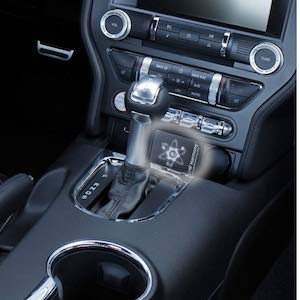
The current EMF Harmony car page describes neutralizing radiation and safeguarding occupants. It also says the plate is transitioning from a stainless-steel rectangle to an oval carbon version and directs electric and hybrid car buyers to a separate eCar product. The old photograph and description therefore should not be treated as a verified match for every current version.
Customer ratings and descriptions of energetic frequencies do not establish a measured reduction of the relevant fields or a health benefit for a particular vehicle. I have not reviewed every study the company hosts. A recommendation would need a report matching the exact version and claimed result, rather than treating testimonials as that evidence.
Aulterra Whole Car USB neutralizer

The current Aulterra Whole Car product page makes broad claims for neutralization in vehicles, while explicitly saying its neutralizers do not block, absorb or remove EMFs and that a gauss meter will not show less magnetic field. It should not be described as a USB shield that eliminates the fields from the car’s electronics.
Those statements concern a claimed biological effect, not a demonstrated reduction on a field meter. I have not completed a review of all the company’s research, so I am not making a blanket claim that no research exists. I would need evidence for this car accessory, the stated outcome and realistic use before recommending it as whole-car health protection.
If you feel sleepy while driving
Feeling tired in a car deserves attention, but it does not identify EMFs as the cause. The earlier article attributed driver sleepiness to radiation and cited a Scripps Clinic result without an identifiable study reference. I cannot substantiate that claim from the material reviewed for this update.
NHTSA’s drowsy-driving guidance focuses on sleep, medication effects, alcohol and other established driving-risk factors. If you become sleepy, stop in a safe place and rest. Do not rely on a harmonizer, open window or lower meter reading to keep driving safely.
Questions readers ask about EMFs in cars
Does opening the windows reduce car EMFs?
Opening a window does not turn off the equipment producing fields inside the car. The effect on a particular RF reading would need a defined measurement; it is not a way to empty accumulated radiation or eliminate every field.
Can steel-belted tires produce magnetic fields?
Yes. A 1999 paper by Milham, Hatfield and Tell describes very low-frequency fields from rotating magnetized steel-belted tires, usually below 20 Hz. That is a reason to check meter bandwidth, not proof of illness or a reason to choose unsuitable tires. See the paper’s abstract.
Does a zero meter reading mean the car is safe?
It means the instrument did not display a measurable value in that mode and setup. It may miss fields outside its frequency response or brief changes. A zero reading and a color-coded alarm are not medical clearance or a complete compliance assessment.
Is the rear seat always lower in EMFs?
No universal seating rule follows from the evidence here. Fields vary with the vehicle, source, position and operation. Keep seat belts and child restraints correctly used; do not alter safe seating based on a reading from a different vehicle.
Does a USB car neutralizer block radiation?
A USB connector does not establish shielding. Aulterra’s Whole Car page explicitly says its neutralizers do not block, absorb or remove EMFs. Claims about biological effects require their own relevant evidence.






Hey David! That is really helpful, I’ll look into these things.
To add to your list per my reading of Dirty Electricity by Samuel Milham, he noticed that steel belted radial tires create a field as well. Could you say more on this topic?
Hey Brian! That is interesting, I haven’t heard of that. I’ll look into it, thank you!
Hello Christian: Thank you for all you are doing in this field. You had a short article that basically asked a question, “should we be concerned about electronics in cars”? I say yes! Big time. I have an older car, a 2000 Mercury Grand Marquis. I am electrically sensitive and I have already reached the stage to where I cannot drive in heavy traffic. Especially if I am on a four lane or six lane road stopped at a traffic light surrounded by vehicles. That happened to me a week and a half ago and in a heavy traffic portion of town up the road from here every traffic light was red when I approached. Once stopped I felt as if I was on fire. My skin was burning all over and I was having anxiety attacks. After the light changed and I got away it let up, but as soon as I had to stop again and was surrounded again it started all over again. By the time I got to my chiropractor’s office I was trembling all over and burning all over. Blood pressure had gone up to 177/92. I had to turn around and go home and cancel the chiropractor appt. I can no longer go up there at all because of this and have to stay out of heavy traffic altogether. I can only see this getting a lot worse, especially with the self driving cars they are coming out with that have multiple radar transmitters on them among other things. I see a very bad future for a lot of us with this irresponsible use of run away technology. By the way, my back ground is in R.F. and audio communications systems with 35 years at John F. Kennedy Space Center in ground communications as well as several years as a commercial radio broadcast engineer until I had to resign because of EMF sensitivity. ————– Thanks again: Dave W.
Thank you for all the information you’ve shared. I’m wondering if opening the windows while driving and at home releases some of the EMF.
That’s a great question! My answer would be no, windows already don’t offer much in the way of block EMF radiation and it is able to exit via the windows anyway. The EMF radiation is greatest around the footwell of the vehicle, nearest to the electrical components of the car.
Hello,
I have the TriField meter, and I don’t understand the different between all the different checks. There’s Standard Mag and Standard Elec as well as Weighted Mag and Weighted Elec. Do they all need to be at zero to be safe?
Great questions! I actually just made a Youtube video answering exactly these questions for that EMF meter: https://www.youtube.com/watch?v=OiR_sArKPio&t=9s